




What Happens to Your Bet if a Horse Race Is Abandoned?
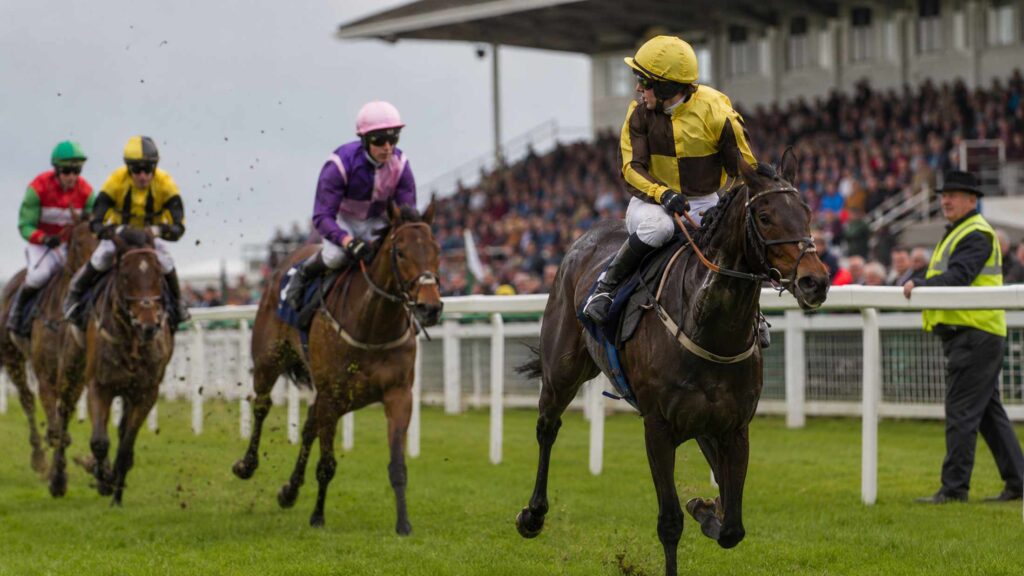
An abandoned race does not usually mean losing your stake. If a race is never run or is declared void, most standard bets are refunded, although rules can differ for accumulators, ante-post bets and rescheduled races.
The issue has been particularly relevant in Ireland after several races at Bellewstown were abandoned in late August, followed by the cancellation of Clonmel’s 2 September Flat fixture due to ground conditions.
Safety has to come first.” — Emmet McNamara, Irish Jockeys Association
What happens to a bet when a horse race is abandoned?
For a normal win, place or each-way bet, the simplest rule is usually the right one: if the race is officially abandoned or declared void, the bet is void and your stake is returned.
Published horse-racing settlement rules across major bookmakers follow that basic principle. Tote Ireland’s betting conditions also define a void race as one that is abandoned before or after horses have been declared to start, or one that is never run.
| Situation | What normally happens |
|---|---|
| Race cancelled before it starts | Bet void, stake returned |
| Race starts but is later declared void | Bet void |
| Meeting abandoned but your race already finished officially | Settled normally |
| Race delayed but run later the same day | Bet will usually stand |
| Race moved to another day | Depends on bookmaker and bet type |
| One leg of an accumulator is void | Usually removed from the accumulator |
| Ante-post bet | Special rules apply |
The important distinction is between the whole meeting being abandoned and a particular race being completed before the abandonment.
At Bellewstown on 25 August, for example, the first two races had taken place before officials abandoned the remainder of the fixture. Bets on those completed races could therefore be settled on their official results; bets on the six races that never took place would fall under abandonment rules.
What happens if the race starts and is then abandoned?
A race starting does not automatically mean every bet must be settled. If officials subsequently declare the contest void, bets on that race will normally also be void. The bookmaker needs an official result on which to settle the market.
This is different from a race being interrupted but subsequently restarted or completed. If an official result is eventually declared under the applicable racing rules, the bookmaker can generally use that result for settlement.
What happens to an accumulator if one race is abandoned?
Usually, the abandoned selection is removed rather than destroying the entire accumulator. Think of a void leg as effectively being settled at 1.00. For example:
| Original bet | One abandoned leg becomes |
|---|---|
| Double | Single |
| Treble | Double |
| Four-fold | Treble |
| Five-fold | Four-fold |
So if you backed four horses and the third race was abandoned, the bet would generally continue using the other three selections. This treatment is reflected in published racing rules where void selections in accumulative bets are removed and the multiple continues with the remaining legs. Exact treatment can still vary by operator or specialist market.
Are ante-post bets refunded when a race is abandoned?
This is where the answer becomes less automatic. Ante-post betting is different because you are taking a price before the final field is known. Under standard ante-post conditions, simply backing a horse that later fails to run does not normally guarantee a refund unless the market was explicitly offered as Non-Runner No Bet.
An abandoned or rescheduled race is another matter. Bookmakers may void ante-post bets when the event disappears completely, but a bet can sometimes remain valid if the race is rescheduled at the same venue with substantially the same entries.
Published racing rules show how specific this can become: a change of track, reopening of entries or material change to the race can alter whether existing ante-post bets remain valid.
Ante-post checklist
Before assuming your bet has been refunded, check:
- Was the race completely abandoned or merely postponed?
- Will it take place at the same course?
- Have entries been reopened?
- Did you bet ante-post or after final declarations?
- Was Non-Runner No Bet explicitly offered?
- What do that bookmaker’s racing rules say about rescheduled events?
That last point matters. There is no sensible reason to assume every bookmaker handles every rescheduled ante-post market identically.
What happened at Bellewstown and Clonmel?
The recent Irish examples show two different types of disruption.
Bellewstown: racing stopped after it had begun
Bellewstown’s 300th anniversary fixture on Tuesday 25 August was stopped after two races following several incidents on the track. The remaining six contests were abandoned on safety grounds under Rule 10. Racing returned the following afternoon, but another slipping incident in race six led officials to abandon the final two contests.
For bettors, that means the completed races and abandoned races are treated separately rather than the entire card automatically being erased.
Clonmel: the meeting was cancelled before race day
Clonmel was different. Its Flat meeting scheduled for Wednesday 2 September was cancelled several days beforehand because prolonged dry weather had left the course unsuitable. Horse Racing Ireland subsequently scheduled an additional Flat fixture at Navan for 2 September following the loss of the six Bellewstown races and the Clonmel card.
That distinction matters for betting: Clonmel never reached the stage where some races were completed and others abandoned.
Navan replacement meeting odds: 2 September 2026
The additional Navan fixture gives Irish racing fans an immediate alternative following the disruption at Bellewstown and Clonmel. One of the more open races is the 18:40 Navan Handicap, Division II, over one mile and 20 yards.
Prices can change right up to race time, so check the live market before placing a bet.
Is an abandoned race the same as a non-runner?
They are two different situations: a non-runner is an individual horse withdrawn from a race that still takes place. Depending on when you backed it and whether the bet was ante-post, your stake may be refunded or the bet may lose.
An abandoned race means the race itself does not produce a valid result.
This distinction is also why Rule 4 deductions should not be confused with abandoned-race refunds. Rule 4 normally deals with horses being withdrawn after fixed prices have been taken from the remaining runners; it is not the standard mechanism for settling a race that never takes place.
What happens to an each-way bet?
If the entire race is void, both parts of a standard each-way bet are normally void.
Remember that an each-way bet is effectively two wagers:
- one on the horse to win;
- one on the horse to place.
Without a valid race result there is no win result or place result to settle, so the stake attached to both components would normally be returned.
What should you do if your bet has not been refunded?
First, check whether the race was officially abandoned rather than merely delayed.
Then look at the bet slip and identify whether it was:
- a normal race-day single;
- part of an accumulator;
- an ante-post bet;
- a free or bonus bet;
- a special market covering several races.
If the settlement still looks wrong, open the bookmaker’s horse-racing rules before contacting customer support. Quoting the exact race, date and bet ID will usually make the issue easier to resolve.
The bottom line
For most Irish punters, an abandoned horse race is straightforward: no official race, no settled win-or-lose result, and the standard race-day bet is normally void.
The complications begin with accumulators, ante-post betting, rescheduled races and bonus stakes. Bellewstown showed why part of a meeting can be settled while later races are refunded. Clonmel showed the cleaner version, a fixture cancelled before racing begins. In either case, checking the bookmaker’s settlement rules is more useful than assuming every abandoned meeting is treated in exactly the same way.